Blog/Guides
6 Best Crisp Alternatives in 2026
Compare six serious Crisp alternatives by operating model, AI depth, pricing, and the work each platform actually completes.

Owen Hart
Sep 4, 2026
The best Crisp alternative depends on what your support system must finish. Choose LLDTEK when customer conversations must become correctly placed appointments. Choose YourGPT when you need configurable AI agents across support, sales, and operations. Choose Intercom for a product-led helpdesk with a deeply integrated AI agent. Help Scout is the cleanest email-first option, Freshdesk offers the strongest conventional ticketing value, and LiveChat remains a focused choice for real-time website sales and support.
Crisp still sells the chat widget. It also sells the line on its homepage: the AI Customer Support Platform, with an omnichannel inbox, knowledge base, CRM, flat pricing, and Hugo. Crisp’s own copy is the claim to test. The homepage says Hugo will automate 50% of inquiries. Hugo’s site says it will resolve up to 60% of support tickets. Published customer quotes on that page sit in the same band: Emma at about 40%, Spider-VO at about 40%, AFS Foiling at about 60%.
That is FAQ-and-status automation, the class AI-first inboxes were selling in 2023. Hugo can also run configured actions, including refunds, account changes, and bookings through integrations. The useful comparison with Intercom is how each platform configures, measures, prices, and governs resolution, not whether either one can complete an action. Hugo still hallucinates enough that Crisp documents a dedicated mitigation model and a help article for wrong replies. A 2026 G2 review put the same failure in the title: hallucinated responses and conversations routed to the wrong inbox. Customizing it is tedious. Identity, training sources, a business prompt, instructions, routing rules, confidence, models, and integrations all have to line up before the 50% appears. The marketing says under five minutes. The console is four layers of setup and ongoing tuning.
Compare Crisp as they sell it: a shared inbox with a 50–60% FAQ bot and a flat workspace bill. Then ask whether you actually need a seat-based helpdesk, an agent that calls tools, or a system built around a live appointment book.
Pricing and product details in this guide were checked on 8 September 2026 using the official pages linked inside each review. Vendor pricing changes frequently, so confirm the final quote before signing.
Choose for the Need, Not the Brand
Most Crisp alternatives fall into four different categories. Helpdesks organize work around tickets and service levels. Shared inboxes organize work around human conversations. AI agent platforms organize work around knowledge, tools, and completed actions. Appointment systems must go one step further by reading availability, service duration, staff, rooms, and stop conditions before writing anything into a calendar.
That distinction matters. A polished chatbot can answer a pricing question and still fail the business if the customer wanted a booking, refund, or account change. Compare products using the same real workload, not six vendor demos designed around six different success criteria.
Crisp alternatives at a glance
Crisp vs the six alternatives
Read the table left to right against last month’s work, not against a vendor demo. A cheaper Mini plan still loses if the missed ring had to become a named 90-minute colour.
The six best Crisp alternatives
Every platform below uses the same structure: best fit, current pricing, an official product visual, a concise decision summary, four strengths, and four limitations. The goal is equal evidence and equal scrutiny for every option.
1. LLDTEK
LLDTEK
Appointment operationsBest for: Appointment businesses that need calls and messages to become correct bookings across staff, rooms, and locations
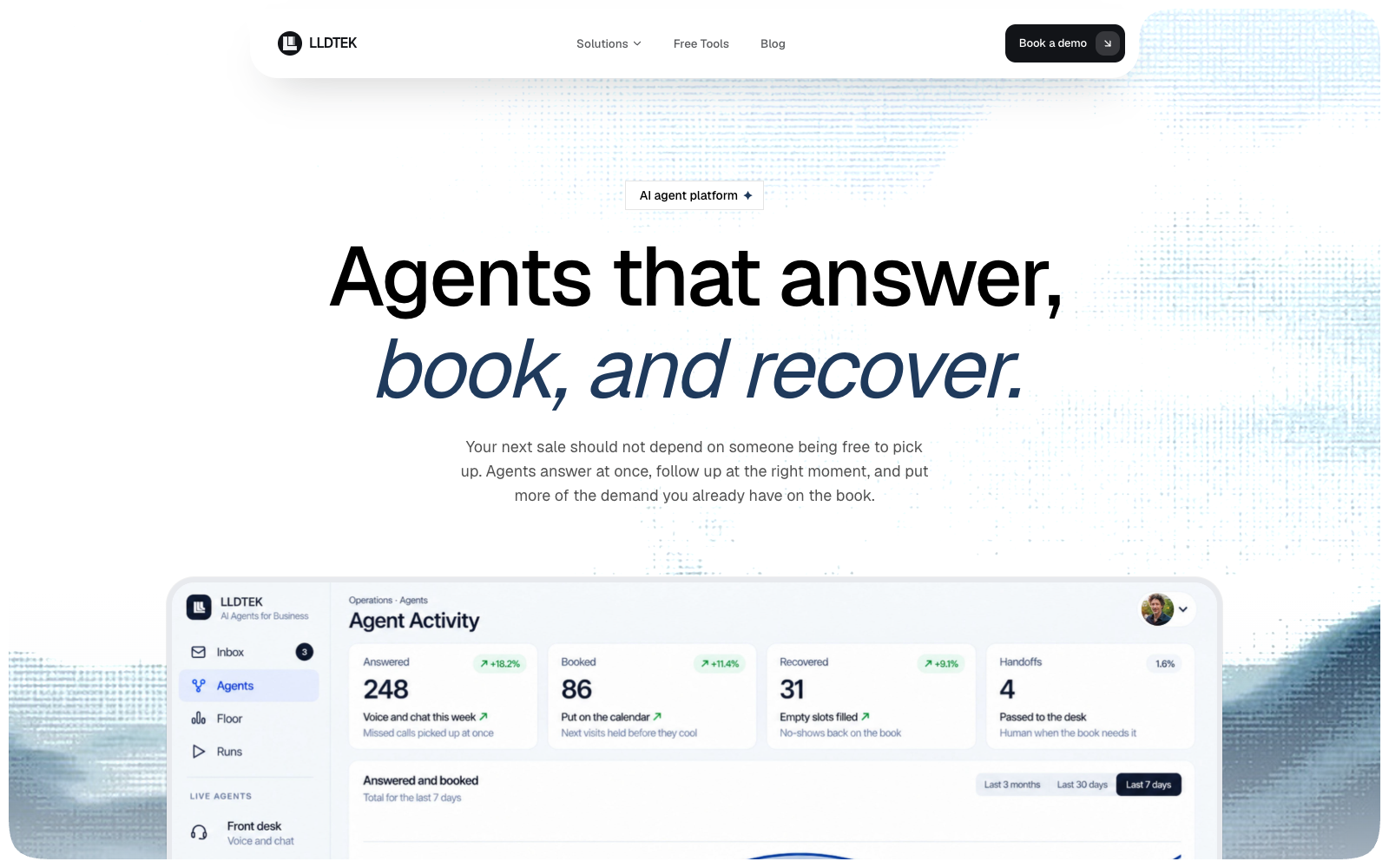
LLDTEK is the strongest specialist alternative when a missed call must become a named appointment, a cancellation should trigger controlled waitlist recovery, or a completed service should create a rebooking prompt. Its front-desk, recovery, rebooking, reputation, and floor agents sit beside the booking system the business already uses. Voice, SMS, and web share one operating layer. Refunds, disputes, VIP requests, and off-menu exceptions can stop for a person. This differs from Crisp. Crisp is a general support platform; LLDTEK is built for environments where staff, service duration, rooms, chairs, and availability determine whether an answer is valid. Pricing is scoped after reviewing the locations, channels, integrations, and jobs that need staffing rather than offered as a generic self-serve package. That scoping is part of the evaluation.
Pros
- Reads live availability before offering staff, rooms, or times
- Connects front desk, recovery, rebooking, reviews, and floor
- Keeps the existing POS as the system of record
- Stops refunds, disputes, VIPs, and exceptions for people
Cons
- Pricing is scoped rather than published as a self-serve package
- Wrong category when a shared inbox is the entire job
- Needs real scheduling rules for a useful evaluation
- Smaller public review footprint than established helpdesks
2. YourGPT
YourGPT
Configurable AI agentsBest for: Teams building AI agents for support, lead qualification, operations, and messaging channels
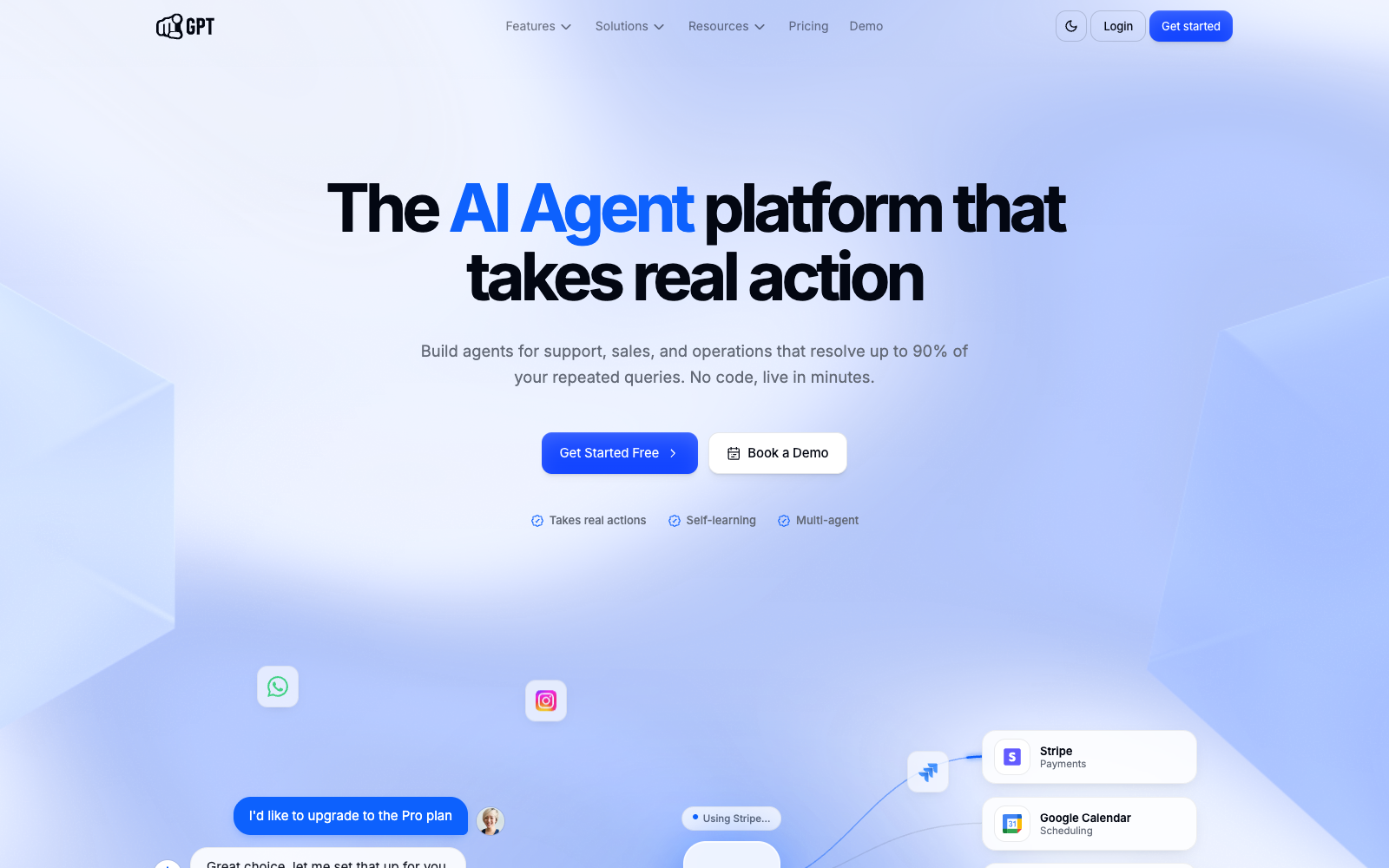
YourGPT is the better fit when Crisp's shared inbox is not the center of the project and the real goal is to design AI agents that use knowledge, tools, functions, APIs, and workflows. It can support website conversations and messaging channels while also qualifying leads, creating tickets, checking records, triggering business actions, and escalating with context. That flexibility is valuable, but it shifts more responsibility to the buyer. You need clear knowledge ownership, tool permissions, test cases, and handoff rules rather than expecting a useful agent from a quick widget install. Published pricing starts at $39 per month billed annually for Essential, with Professional adding Studio, API access, webhooks, functions, AI helpdesk, and human escalation. Plans use AI credits, so test your real conversation mix before estimating monthly cost.
Pros
- Builds agents with knowledge, tools, APIs, and workflows
- Supports customer-facing and internal operations
- Publishes self-serve plans without a sales call
- Adds human escalation and broader tooling on higher tiers
Cons
- More setup than a simple shared inbox
- Credit use varies by model and conversation length
- Tool permissions need active ownership
- Needs scheduling integration for appointment operations
3. Intercom
Intercom
Product-led helpdeskBest for: SaaS and digital product teams that want an omnichannel helpdesk and Fin AI Agent in one operating system
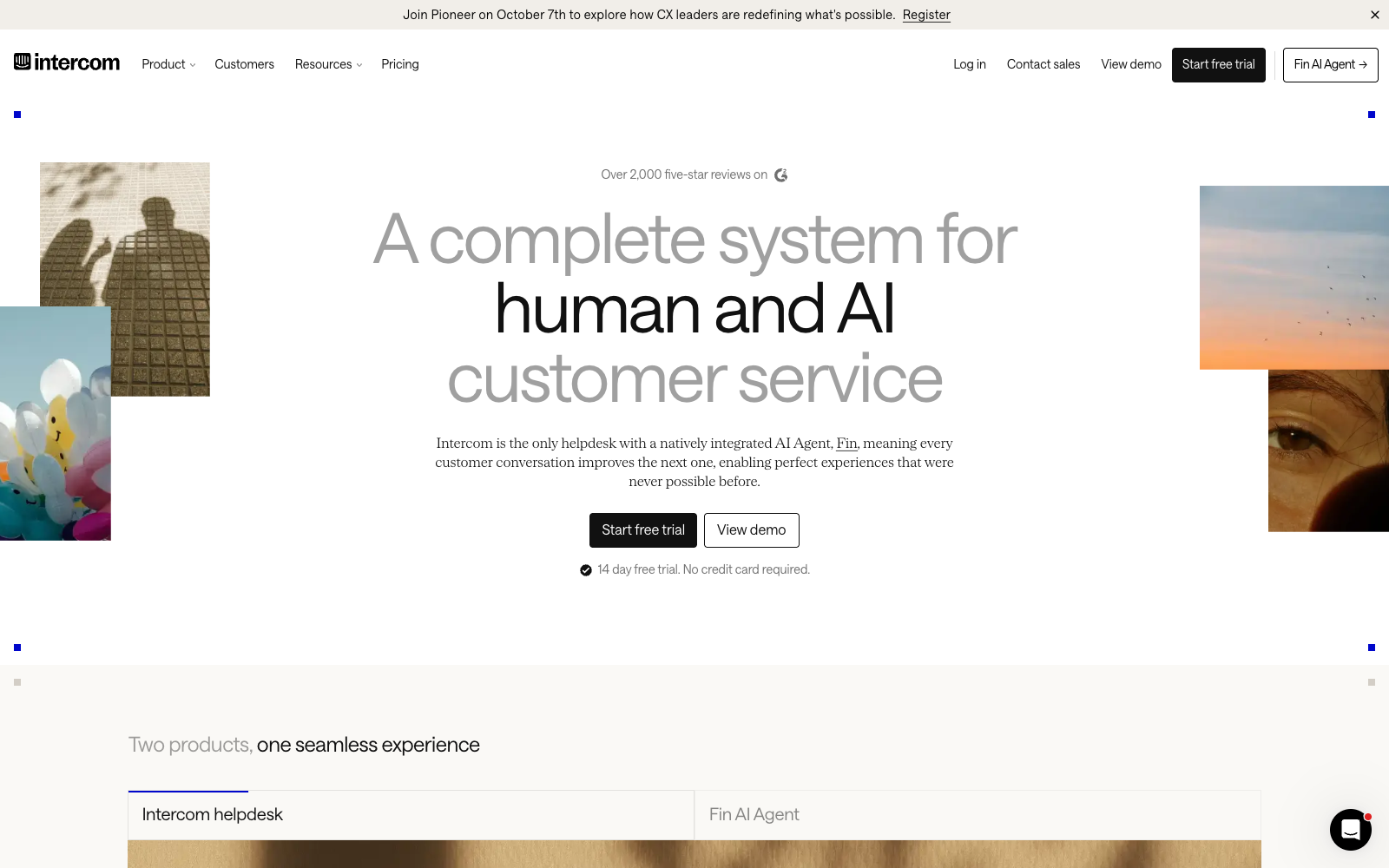
Intercom is the most complete Crisp alternative for product-led companies that want the inbox, ticketing, knowledge, proactive messaging, and AI resolution layer to share one customer record. Fin can answer across supported channels, use knowledge and customer context, take actions, and hand work to a teammate inside the same system. That coherence is the reason to pay more, not the messenger alone. The purchasing risk is cost complexity. Intercom pricing starts at $29 per seat per month on annual billing, while Fin is listed at $0.99 per outcome. Channels, seats, and add-ons can change the final bill, so model a normal month and a high-volume month before procurement. Choose Intercom when support is a core product function and the team will use the broader helpdesk every day, not when you only need a low-cost website chat box.
Pros
- Combines AI agent, inbox, tickets, knowledge, and proactive support
- Keeps Fin and human teammates inside one customer service record
- Supports complex product-support workflows and multiple channels
- Publishes both entry seat pricing and Fin's outcome price
Cons
- Total spend can combine seats, AI outcomes, channels, and add-ons
- Requires disciplined knowledge maintenance to keep AI answers reliable
- Heavier implementation than a lightweight chat-first workspace
- Poor fit for businesses whose primary unit of work is a live appointment book
4. Help Scout
Help Scout
Human-centered inboxBest for: Small and mid-sized teams that prioritize clear email workflows, collaboration, customer context, and a low-friction support experience
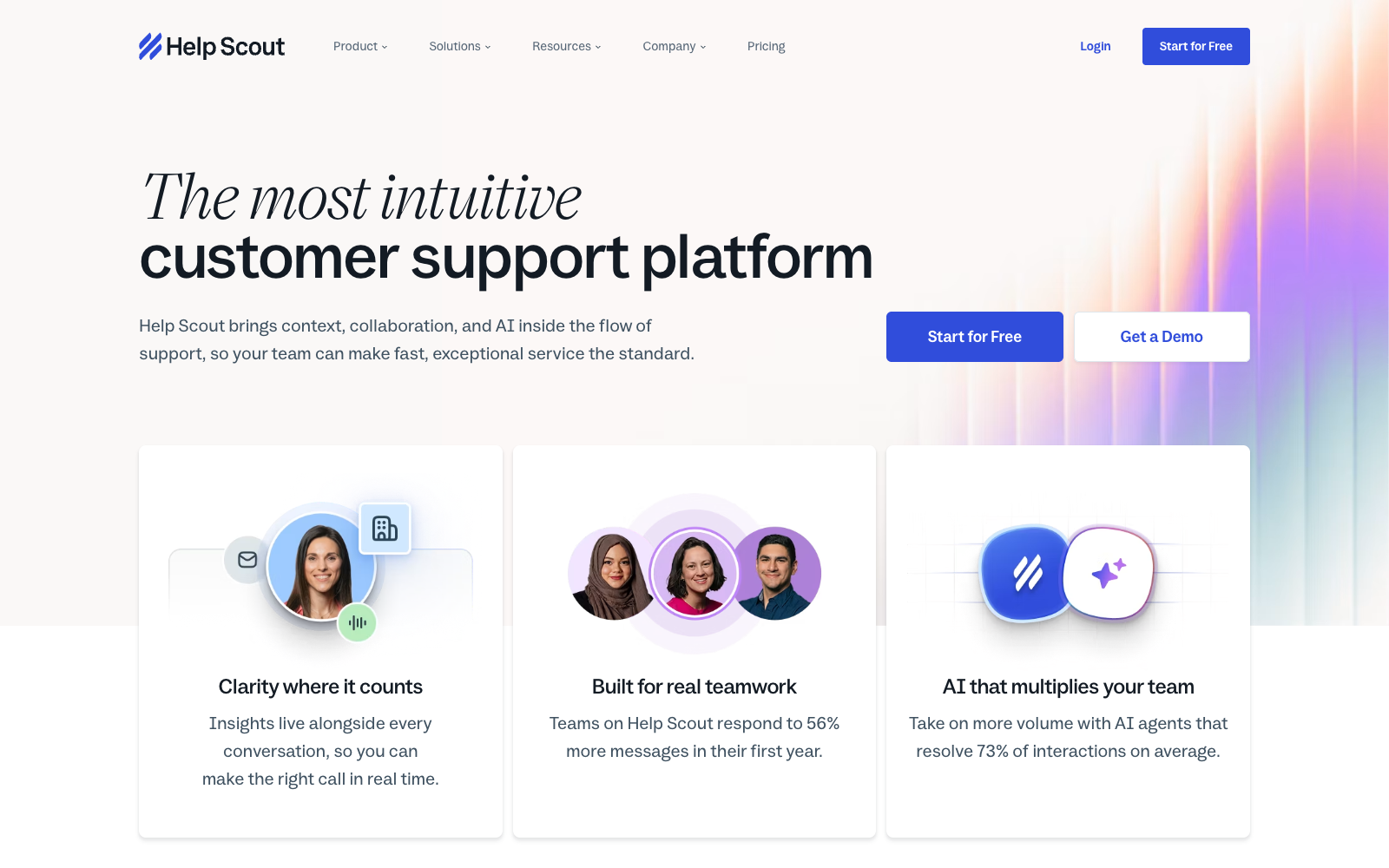
Help Scout is the strongest Crisp alternative for teams that want a calm shared inbox rather than a dense ticketing system. Mailboxes, Docs, Beacon, customer context, collaboration, reporting, and AI assistance sit inside a familiar email workflow. This suits service teams where thoughtful human replies matter more than aggressive automation. Help Scout pricing includes a free plan for up to five users, Standard at $25 per user per month, Plus at $45, and Pro at $75. AI Answers is listed at $0.75 per resolution after its trial allowance. Help Scout is less widget-centric than Crisp and less operationally heavy than Freshdesk. Choose it when the team spends most of the day handling email and asynchronous conversations. Test a full week of email, one refund, one handoff, and one missing article.
Pros
- Keeps shared inbox collaboration simple and approachable for human teams
- Includes a free plan that is useful for a small support operation
- Connects inboxes, Docs, Beacon, customer context, and reporting
- Prices AI Answers separately enough to model automation cost
Cons
- Less suitable for high-complexity enterprise ticket administration
- Live website chat is not as central to the product as it is in Crisp
- Some channels and advanced controls require higher plans
- Per-user pricing can become expensive as occasional collaborators increase
5. Freshdesk
Freshdesk
Structured ticketingBest for: Support organizations that need ticket queues, service levels, portals, routing, reporting, and a staged path into AI automation
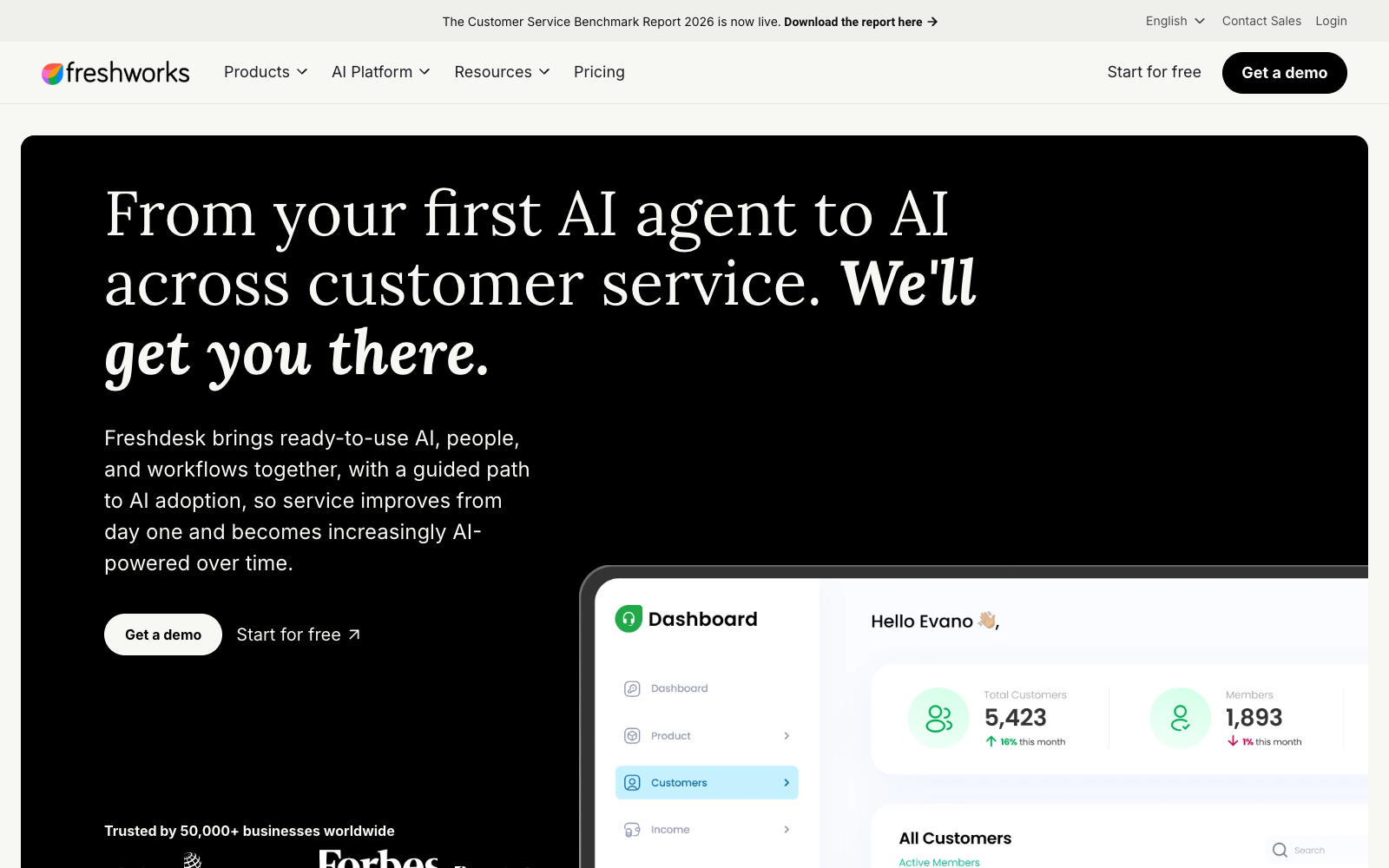
Freshdesk is the practical Crisp alternative when support needs ticket structure, service levels, portals, routing, roles, and administration. Crisp starts from conversations; Freshdesk starts from the helpdesk operating model and treats messaging as one route into it. That makes Freshdesk easier to justify for teams measuring queue ownership, response targets, escalations, and agent performance. Freshdesk pricing lists Growth at $19 per agent per month billed annually, Pro at $55, and Enterprise at $89. Plans include an initial Freddy AI Agent session allowance, with more sessions sold in packs. Entry pricing is attractive, but map the automation, reporting, security, and channels required before choosing a tier. Freshdesk is strongest when operational control matters more than Crisp's chat-native feel. Test one real queue before committing.
Pros
- Provides mature ticket queues, service levels, portals, roles, and routing
- Offers a comparatively accessible entry price for a structured helpdesk
- Supports a gradual move from human support into Freddy AI automation
- Fits teams that already manage support through measurable ticket operations
Cons
- Adds more setup and administration than a lightweight shared inbox
- The full AI, reporting, and governance experience spans higher-priced tiers
- Session packs make AI cost another variable to forecast
- Feels process-heavy when a small team mainly handles live website chat
6. LiveChat
LiveChat
Real-time website chatBest for: Ecommerce and sales-led teams that want fast website conversations, visitor context, agent productivity tools, and conversion visibility
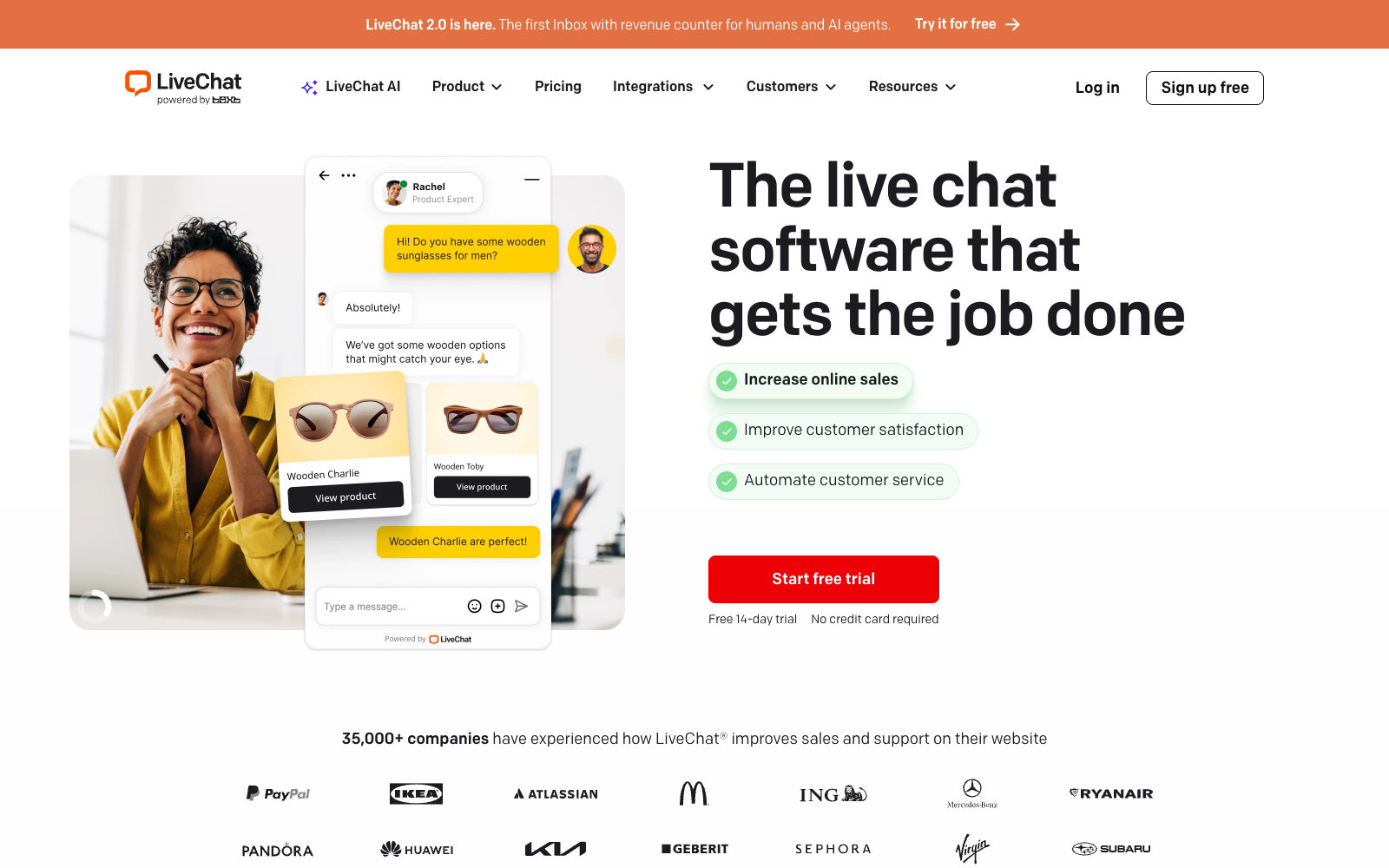
LiveChat is the focused Crisp alternative for teams that treat website chat as a revenue and service channel rather than part of a broad helpdesk. The product emphasizes fast conversations, visitor context, routing, chat history, reporting, ecommerce integrations, and AI assistance. Its interface is easy to understand, and the base purchasing model is straightforward. LiveChat pricing starts at $19 per person per month billed annually, with Team at $49 and Business at $79. The important caveat is scope. Advanced chatbot automation may involve ChatBot.com as a separate product and cost center. Choose LiveChat when a staffed real-time channel is the priority. Keep Crisp when the broader shared inbox across email and messaging channels matters more than dedicated website-chat depth.
Pros
- Purpose-built workspace for website sales and support conversations
- Visitor context, routing, reporting, and agent productivity tools
- Broad marketplace of ecommerce and website integrations
- Clear per-person starting price with a free trial
Cons
- Advanced automation can require a second product and subscription
- Per-person pricing grows with the active agent count
- Email-first teams may need a broader helpdesk
- Does not book against staff and room capacity
When Crisp is still the better choice
Keep Crisp when the shared workspace is the feature you value most, and you can live with Hugo as a 50–60% FAQ layer. Its current pricing is flat per workspace at the main plan level: Free, Mini at $45 per month, Essentials at $95, and Plus at $295, with plan limits and optional additions layered around those tiers. Hugo credits are available before Plus. Higher plans expand channels, ticketing, and administration. They do not turn Hugo into 2026-class resolution.
Crisp is sensible when a small group wants live chat, email, social messaging, and a knowledge base without multiplying a seat fee, and the remaining 40–50% of conversations can sit with a person. Leave when hallucination, routing, and instruction-tuning become the week’s work, or when another operating model is the actual job: Intercom's integrated AI helpdesk, Help Scout's email-first simplicity, Freshdesk's ticket controls, LiveChat's real-time sales focus, YourGPT's agent-building surface, or LLDTEK's appointment-aware workflows.
A safer way to choose
Shortlist two products, then run the same twenty conversations through both. Include easy questions, missing knowledge, an angry customer, a refund request, an account-specific action, and a handoff. On Crisp, add three questions Hugo should refuse and three it likes to invent. Track the percentage fully resolved, correctly escalated, or left for a person to repair. Add seats, AI usage, channels, and the hours you spent writing instructions to the same cost sheet.
If bookings are involved, add one more test: ask for a multi-service appointment during a busy period and verify the result inside the real calendar. A transcript that says “you are booked” is not proof. The visit must exist with the correct staff member, duration, room or chair, and stop condition. Use the same standard described in what to test on an AI receptionist demo.
The strongest alternative is not the product with the longest feature list. It is the one whose default operating model matches the work your team repeats every day.
Questions
Commonly asked questions
No. Crisp, Intercom, Help Scout, Freshdesk, and LiveChat can take the name and dump a lead in the inbox. They do not read who is free, colour overlap, or a sold chair. If the missed ring has to become a named tech, duration, and chair in the POS you already run, that is LLDTEK. If the leak is Instagram DMs after ads, YourGPT can cover the messenger. The chair-level roundup is 8 Best AI Chatbots for Beauty Salons & Spas.
Crisp’s homepage says automate 50% of inquiries. Hugo’s site says resolve up to 60% of support tickets. The customer quotes they publish sit in that band: about 40% at Emma and Spider-VO, about 60% at AFS Foiling. Treat 50–60% as the FAQ-and-status ceiling, not a refund, an account change, or a named visit. Hallucination is the leak. Crisp’s own help center has a page for wrong replies. If the remaining 40–50% has to finish work, you are shopping a different class of product.
Stay if Essentials still covers the seats and Hugo is a bonus. Mini is about $5 of Hugo credits and four seats. Essentials at $95 opens omnichannel and about $25 of credits. Plus at $295 is the ticketing, white-label, and larger credit pool.
Leave when you need tickets at scale, Fin-class resolution inside one record, agents that call tools, or a living book. A four-person team still on Essentials is cheaper than Intercom seats plus Fin outcomes.
Four people on Crisp Essentials is $95 for the workspace, extra seats on top. Four people on Intercom Essential is $116 a month annual before Fin. Buy Crisp when chat plus email is the work and the flat workspace bill is the feature.
Buy Intercom when Fin has to resolve inside the same record as the human inbox and you can forecast $0.99 per outcome. Model 500 and 2,000 Fin resolutions on last month’s volume before you migrate.
No. YourGPT is an agent platform: knowledge, tools, actions, messengers. Crisp is the collaborative inbox humans sit in all day. Replace Crisp with YourGPT only if the inbox was mostly a trained FAQ and a messenger layer.
Keep Crisp if operators live in threads, private notes, and assignment. A common split is Crisp for the humans and YourGPT for the repetitive cluster that should never have reached the inbox.
Only if you accept tickets as the system of record. Chat becomes a channel into a queue, SLAs, and a portal. Teams that want a chat-native inbox with almost no ticket ceremony will feel the process on day one.
Run the same week of website traffic in both before you cut the Crisp snippet. If the team still thinks in conversations rather than tickets, Help Scout or staying on Crisp is the closer move.
For a small store that needs website chat plus a capped AI bot, Tidio is usually the closer Crisp competitor. LiveChat is the dedicated sales-chat floor with visitor monitoring and a separate ChatBot product.
Neither writes a named visit into Vagaro or Square. If the leak is unanswered rings against a live book, skip both and test LLDTEK.
Export contacts and history first. Stand up the new provider’s WhatsApp and Instagram connections while Crisp is still live. Run dual-inbox for one billing cycle, with Crisp read-only for old threads.
Rebuild refund and VIP stops before you swap the website snippet. Cut Crisp on a quiet weekday, watch the first fifty conversations, then cancel. Do not migrate the till in the same week. That decision is Do you need a new POS for an AI receptionist.
The same expensive job twice: a common question, a live-data lookup, a policy exception, and a handoff. If bookings are involved, ask for a combo during a busy slot and refresh the real calendar. A transcript that says you are booked is not proof.
Use the checklist in what to test on an AI receptionist demo. For appointment teams, bring one week of real bookings.
Updated Sep 8, 2026.